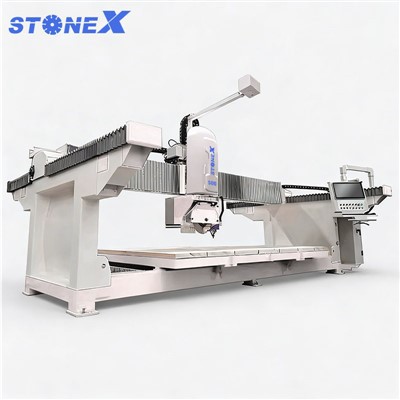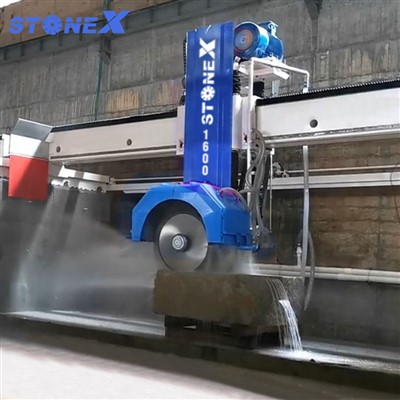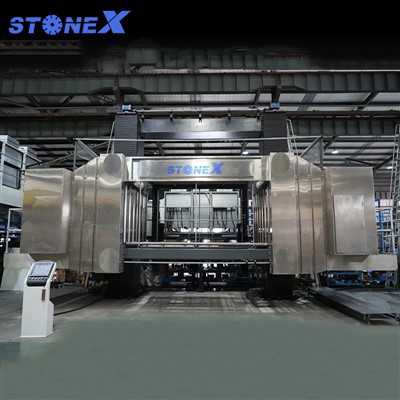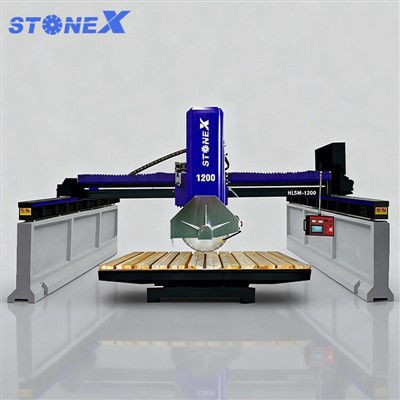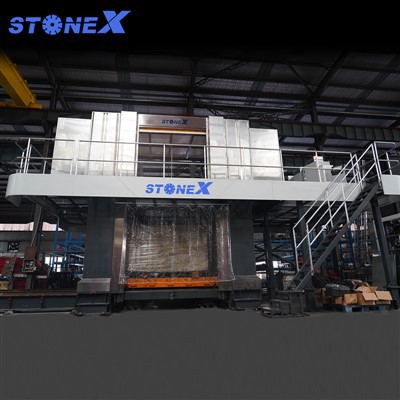


Hey there! As a supplier of Stone Multi Blade Cutting Machines, I often get asked about the cutting quality inspection methods for these bad boys. So, I thought I'd put together this blog post to share some insights and tips on how to ensure top-notch cutting quality.
First off, let's talk about why cutting quality is so important. When you're using a Stone Multi Blade Cutting Machine, you want to make sure that the cuts are clean, precise, and consistent. This not only affects the appearance of the finished product but also its structural integrity. A poor-quality cut can lead to weak spots, uneven edges, and other issues that can compromise the overall quality of the stone.
So, how do you go about inspecting the cutting quality of a Stone Multi Blade Cutting Machine? Well, there are several methods you can use, and I'll go through them one by one.
Visual Inspection
The first and most obvious method is visual inspection. This involves simply looking at the cuts to see if they meet your standards. You should check for things like straight edges, smooth surfaces, and consistent thickness. Any signs of chipping, cracking, or unevenness could indicate a problem with the cutting quality.
When doing a visual inspection, it's important to use good lighting. This will help you see any imperfections more clearly. You can also use a magnifying glass to get a closer look at the cuts. Pay attention to the edges of the cuts, as these are often the areas where problems are most likely to occur.
Measuring the Thickness
Another important aspect of cutting quality is the thickness of the cuts. You want to make sure that the cuts are of the correct thickness and that they are consistent throughout the entire piece of stone. To measure the thickness, you can use a caliper or a micrometer.
When measuring the thickness, it's important to take multiple measurements at different points along the cut. This will help you ensure that the thickness is consistent and that there are no variations. If you find that the thickness is not consistent, it could be a sign of a problem with the cutting machine or the blade.
Checking the Surface Finish
The surface finish of the cuts is also an important factor to consider. You want the cuts to be smooth and free of any rough spots or scratches. To check the surface finish, you can run your hand over the cuts or use a surface roughness tester.
If you find that the surface finish is not smooth, it could be a sign of a problem with the blade or the cutting machine. You may need to sharpen the blade or adjust the settings on the machine to improve the surface finish.
Testing the Edge Quality
The edge quality of the cuts is another important aspect of cutting quality. You want the edges to be straight and free of any chipping or cracking. To test the edge quality, you can use a straightedge or a square.
Place the straightedge or square along the edge of the cut and check for any gaps or deviations. If you find that the edge is not straight or that there is chipping or cracking, it could be a sign of a problem with the blade or the cutting machine. You may need to replace the blade or adjust the settings on the machine to improve the edge quality.


Using a Coordinate Measuring Machine (CMM)
For more precise and accurate measurements, you can use a Coordinate Measuring Machine (CMM). A CMM is a high-precision measuring device that can measure the dimensions and shape of an object with great accuracy.
To use a CMM, you need to place the stone on the measuring table and use the machine to take measurements of the cuts. The CMM will then provide you with detailed information about the dimensions and shape of the cuts, including the thickness, length, width, and angle.
Using a CMM can be a bit more expensive and time-consuming than the other methods, but it can provide you with the most accurate and detailed information about the cutting quality.
Other Factors to Consider
In addition to the above methods, there are several other factors that can affect the cutting quality of a Stone Multi Blade Cutting Machine. These include:
- Blade Quality: The quality of the blade is one of the most important factors that can affect the cutting quality. You want to make sure that you are using a high-quality blade that is designed for the type of stone you are cutting.
- Machine Settings: The settings on the cutting machine can also have a big impact on the cutting quality. You want to make sure that the machine is set up correctly and that the cutting speed, feed rate, and other settings are appropriate for the type of stone you are cutting.
- Operator Skill: The skill of the operator is another important factor that can affect the cutting quality. You want to make sure that the operator is trained and experienced in using the Stone Multi Blade Cutting Machine and that they know how to adjust the settings and troubleshoot any problems that may arise.
Conclusion
So, there you have it! These are some of the methods you can use to inspect the cutting quality of a Stone Multi Blade Cutting Machine. By using these methods and paying attention to the other factors that can affect the cutting quality, you can ensure that you are getting the best possible results from your machine.
If you're in the market for a Stone Multi Blade Cutting Machine, be sure to check out our Block Multi Wire Saw Machine, Stone Block Multi Blade Saw, and Stone Multi Wire Saw Cutting Machine. We offer high-quality machines at competitive prices, and our team of experts is always available to help you with any questions or concerns you may have.
If you're interested in learning more about our products or have any questions about cutting quality inspection methods, please don't hesitate to contact us. We'd love to hear from you and help you find the right solution for your needs.
References
- "Cutting Quality Inspection for Stone Cutting Machines" - Journal of Stone Processing
- "Best Practices for Stone Cutting Machine Maintenance" - Stone Industry Magazine
- "The Importance of Blade Quality in Stone Cutting" - Cutting Tool Technology