
Stone Polishing Machine FAQ: Complete Guide to Granite, Marble, and Tile Grinding Equipment
In today's competitive stone fabrication industry, delivering a flawless surface finish is just as important as achieving precise cutting. Whether you're producing granite countertops, polished marble slabs, ceramic tiles, or engineered quartz surfaces, selecting the right stone polishing machine can significantly improve productivity, reduce labor costs, and enhance the quality of every finished product.
As stone processing technology continues to evolve, automated polishing solutions have become the preferred choice for manufacturers looking to increase efficiency while maintaining consistent results. This FAQ guide answers the most common questions about stone polishing equipment and introduces professional polishing solutions from Huayi Machinery for businesses of every size.

What Is a Stone Polishing Machine?
A stone polishing machine is specialized equipment designed to grind, smooth, and polish natural and engineered stone surfaces. Using a sequence of diamond abrasives with progressively finer grit sizes, the machine removes saw marks, eliminates scratches, and creates finishes ranging from honed to high-gloss mirror polish.
Stone polishing machines are widely used for processing:
Granite slabs
Marble slabs
Quartz stone
Artificial stone
Ceramic and porcelain tiles
Terrazzo
Countertops
Wall panels
Flooring materials
Memorial stone
Compared with manual polishing, automated equipment delivers greater consistency, faster production, and significantly lower operating costs.

Which Materials Can Be Polished?
Modern polishing equipment is designed to handle a wide range of stone materials.
Granite
Granite is one of the hardest natural stones, requiring powerful motors, rigid machine structures, and high-quality diamond abrasives. A professional polishing system ensures excellent gloss while preserving the stone's natural texture.
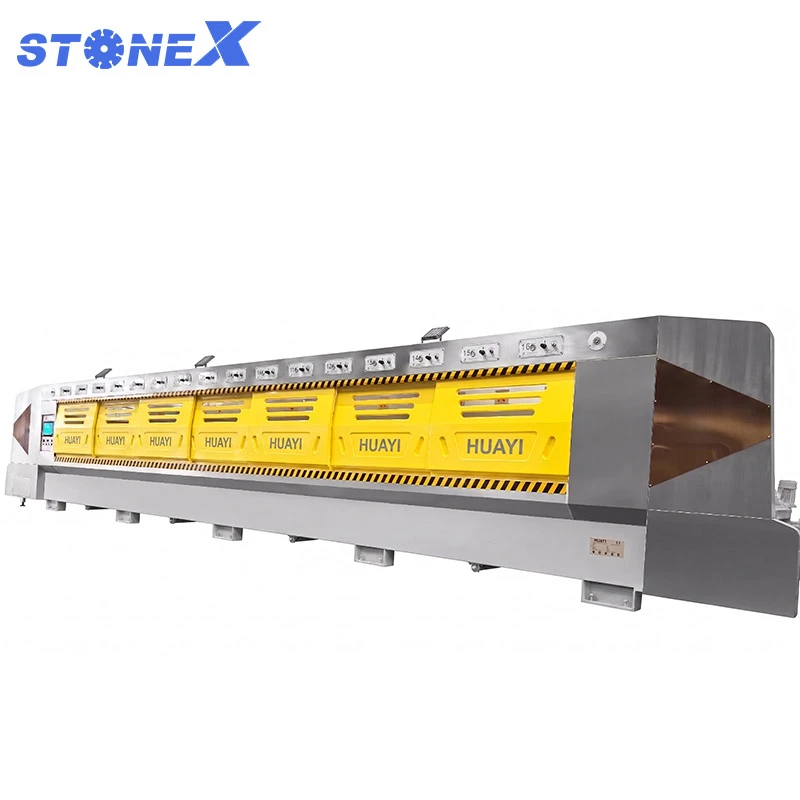
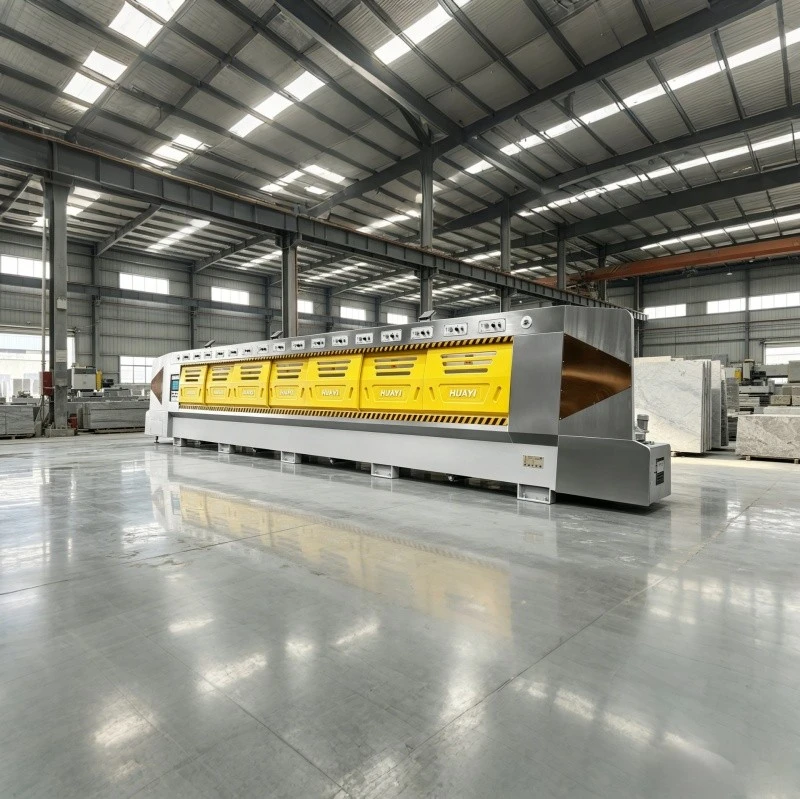
For factories producing large volumes of granite slabs, a granite line polish machine provides continuous processing, stable polishing pressure, and uniform surface quality, making it an ideal solution for industrial-scale production.
Marble
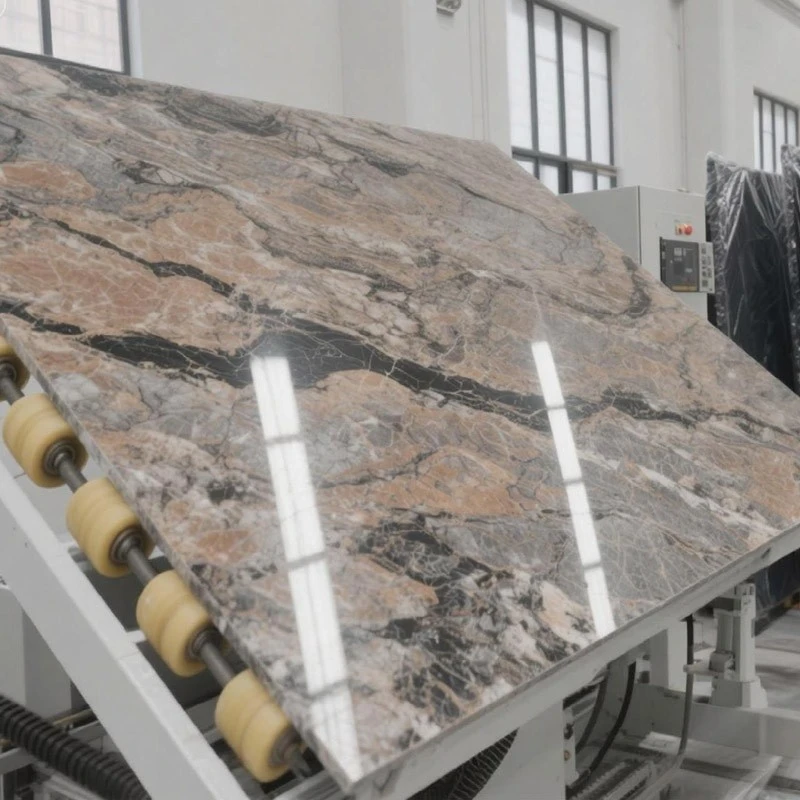
Marble is softer and more delicate than granite. Precise pressure control and consistent polishing speed help preserve its natural veining while achieving exceptional gloss.
Quartz Stone
Engineered quartz requires stable polishing pressure to avoid uneven brightness. Automated polishing systems improve consistency and minimize operator error.
Ceramic and Porcelain Tiles
Tile manufacturers rely on polishing equipment to improve surface smoothness, increase brightness, and prepare products for premium residential and commercial projects.

What Types of Stone Polishing Machines Are Available?
Different production environments require different polishing solutions.
Single Head Stone Polishing Machine
Single-head polishing machines are ideal for:
Small fabrication workshops
Custom countertop manufacturers
Monument processing
Repair and restoration work
Sample production
Key advantages include:
Compact footprint
Easy operation
Lower initial investment
Flexible processing capabilities
Convenient maintenance
For businesses entering the stone fabrication industry, single-head polishing machines offer an economical and reliable solution.

Automatic Continuous Stone Polishing Line
For medium and large stone factories, automatic polishing lines provide far greater productivity than standalone machines.
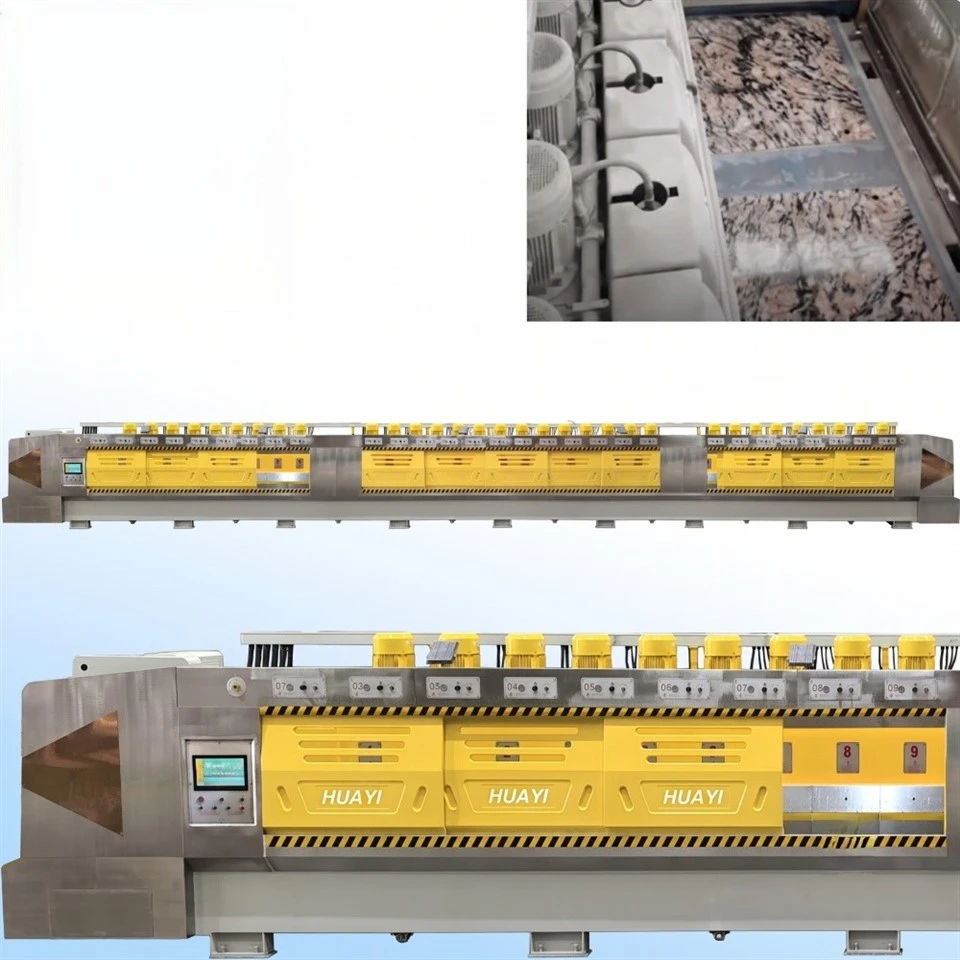
Often referred to as a granite line polish machine, these systems are specifically designed for continuous slab processing, allowing manufacturers to polish large quantities of granite, marble, and engineered stone with consistent quality.
Typical features include:
Multiple polishing heads
Automatic conveyor feeding
PLC intelligent control system
Stable polishing pressure
Adjustable conveyor speed
Continuous production
Reduced labor requirements
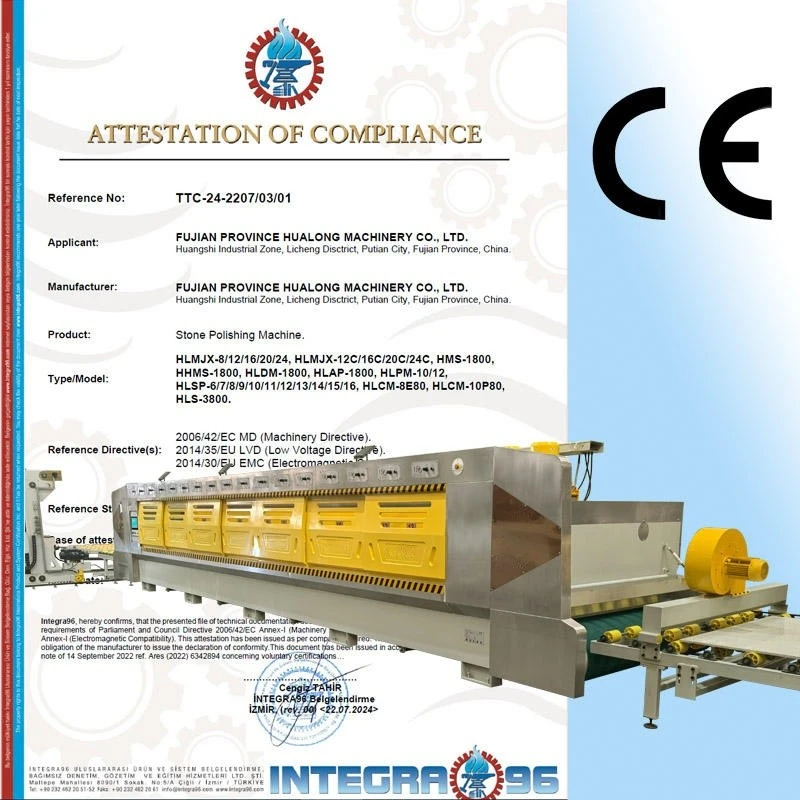
Huayi Machinery's HLMJX Series Automatic Stone Polishing Line combines heavy-duty construction with intelligent automation to deliver stable polishing performance across a wide range of materials. The machine is engineered to maximize production efficiency while maintaining excellent surface consistency, making it an ideal choice for modern stone processing plants.
What Is the Difference Between Grinding and Polishing?
Although grinding and polishing are closely related, they perform different functions.
Grinding
Grinding removes:
Saw marks
Surface irregularities
Uneven thickness
Deep scratches
Diamond grinding tools gradually prepare the stone surface for the polishing process.
Polishing
Polishing uses finer abrasives to:
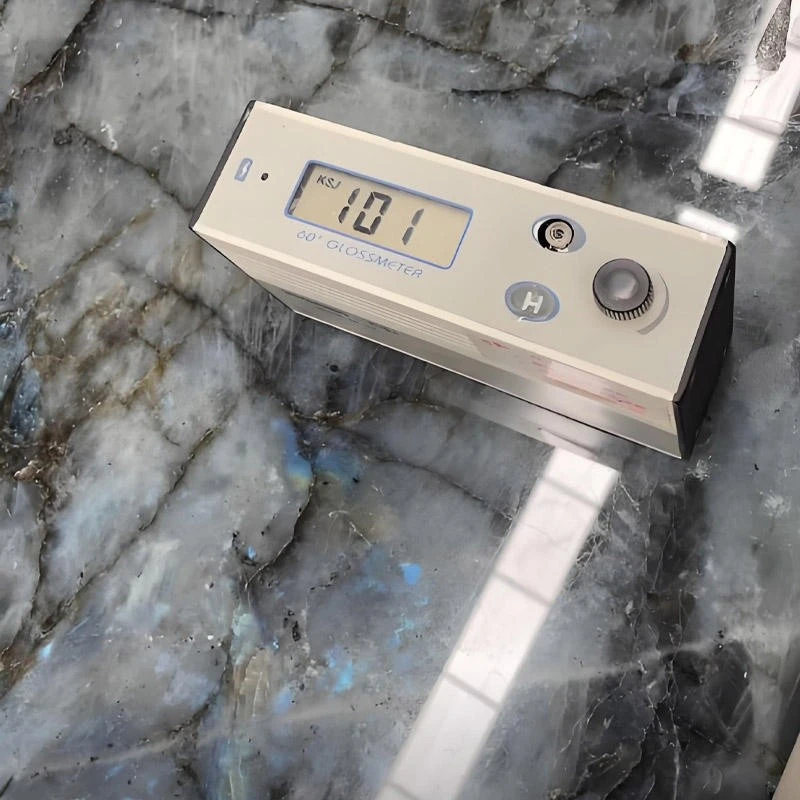
Increase gloss
Enhance natural colors
Reveal stone patterns
Produce a mirror-like finish
A professional polishing process combines both stages to achieve premium surface quality.
How Many Polishing Heads Are Needed?
The ideal number of polishing heads depends on production capacity and daily output.
| Production Scale | Recommended Equipment |
|---|---|
| Small workshops | Single-head polishing machine |
| Medium factories | Multi-head polishing machine |
| Large manufacturers | Automatic stone polishing line |
Machines with more polishing heads can process slabs more efficiently while maintaining stable polishing quality throughout the production cycle.
What Factors Affect Stone Polishing Quality?
Several factors influence the final appearance of polished stone.
Diamond Abrasives
High-quality abrasives provide:
Faster grinding
Better gloss
Longer service life
More consistent polishing results
Machine Stability
A rigid machine frame reduces vibration, allowing polishing heads to maintain uniform contact with the stone surface.
Feed Speed
Proper conveyor speed ensures an ideal balance between production efficiency and surface quality.
Water Cooling
Continuous water circulation:
Prevents overheating
Extends abrasive lifespan
Removes polishing debris
Improves surface cleanliness
Machine Calibration
Proper pressure adjustment and regular maintenance ensure consistent polishing performance over long production periods.
How Can Stone Factories Improve Polishing Efficiency?
Increasing polishing efficiency requires more than simply purchasing new equipment.
Manufacturers can improve productivity by:
Installing automated polishing lines
Selecting abrasives matched to each stone type
Optimizing polishing pressure
Adjusting conveyor speed
Scheduling preventive maintenance
Replacing worn polishing heads on time
Automated production also minimizes manual handling, reduces operator fatigue, and improves product consistency.
Why Choose Huayi Machinery Stone Polishing Equipment?
Huayi Machinery has extensive experience in developing reliable stone processing equipment for customers worldwide. Its polishing solutions are designed to meet the needs of both growing workshops and large-scale industrial manufacturers.
Key advantages include:
Heavy-duty machine structure
Intelligent PLC control
Stable polishing performance
High production efficiency
Low maintenance requirements
Long service life
Professional global technical support
Among its product portfolio, the HLMJX Series Automatic Stone Polishing Line stands out as a high-performance granite line polish machine capable of continuous polishing for granite, marble, quartz, terrazzo, and other stone materials. Its advanced automation helps manufacturers improve throughput while maintaining consistent gloss and reducing labor costs.
In addition to polishing equipment, Huayi Machinery also supplies complete stone fabrication solutions, including CNC bridge saw machines, CNC machining centers, waterjet cutting machines, multi-wire saws, edge profiling machines, and intelligent production lines. These integrated solutions enable customers to build efficient, modern stone processing factories.

Frequently Asked Questions
Can one polishing machine process both granite and marble?
Yes. Most professional polishing machines can process both materials by adjusting polishing parameters and selecting the appropriate diamond abrasives.
Is automatic polishing better than manual polishing?
For commercial production, automatic polishing provides significant advantages, including higher efficiency, lower labor costs, better consistency, and more stable product quality.
How often should polishing heads be replaced?
Replacement intervals depend on the stone material, production volume, and abrasive quality. Regular inspection and preventive maintenance help maintain polishing performance and reduce unexpected downtime.
What should I consider before buying a stone polishing machine?
Before purchasing, evaluate:
Stone materials to be processed
Daily production capacity
Factory layout
Automation requirements
Maintenance support
Future production expansion
Choosing equipment that matches your production goals will provide the best long-term return on investment.
Final Thoughts
Choosing the right stone polishing machine is an investment in product quality, manufacturing efficiency, and long-term business growth. Whether you operate a small fabrication workshop or a large industrial stone processing plant, reliable polishing equipment helps deliver consistent finishes while lowering production costs.
For manufacturers seeking dependable automation, the HLMJX Series Automatic Stone Polishing Line from Huayi Machinery offers an efficient solution for processing granite, marble, quartz, ceramic tiles, and other stone materials. Combining intelligent controls, robust construction, and continuous operation, it functions as a professional granite line polish machine that supports higher productivity, stable polishing quality, and sustainable growth in today's competitive stone industry.
Hot Tags: granite line polish machine, China granite line polish machine manufacturers, suppliers, factory