

The technical characteristics of bridge saws for stone cutting are mainly reflected in the following aspects. First, high-precision cutting. The frame and bridge of the bridge saw adopt a high-rigidity steel structure, combined with a precision guide rail system, ensuring the stability of the saw blade during cutting and guaranteeing a flat cut surface. Dimensional errors can typically be controlled within millimeters. This high precision is crucial for high-end stone processing and architectural decoration. Second, large-format cutting capability. Traditional manual cutting is often limited by tool length and operating space, while bridge saws can easily cut large slabs, such as 3m x 2m marble slabs, meeting the needs of modern construction, decoration, and engineering projects.
The cutting efficiency of bridge saws for stone cutting also far exceeds traditional methods. High-power motors drive diamond saw blades, combined with a CNC system for automated movement, significantly reducing the cutting time for a single slab. Simultaneously, modern bridge saws generally employ cooling systems, using water flow to cool the saw blade, preventing damage and stone cracking caused by high temperatures. Dust control devices manage cutting dust, effectively protecting operator health and reducing environmental pollution.
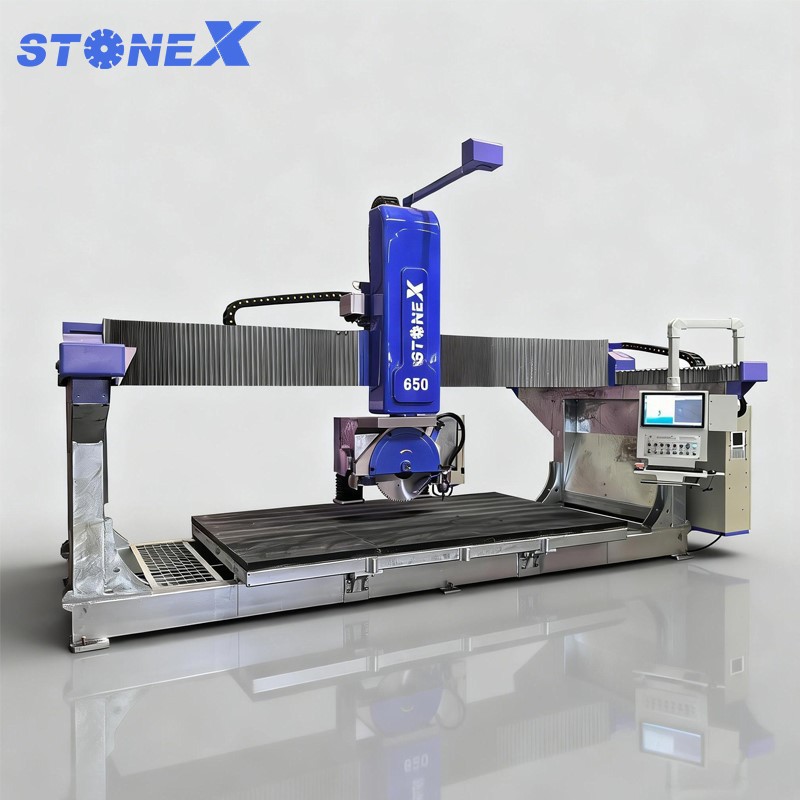
In terms of intelligence, most modern bridge saws for stone cutting are equipped with CNC systems. Operators can input cutting dimensions, angles, and paths via a touchscreen or computer, and the bridge saw will automatically complete the cutting task. The program can store multiple cutting schemes, supporting batch production and complex pattern cutting. Some high-end machines can even perform beveling, curved cutting, or chamfering, expanding the creative possibilities of stone processing beyond just straight-line cutting.
The advantages of bridge saws in stone processing are not only reflected in precision and efficiency, but also in reduced labor costs and material waste. Traditional manual cutting requires multiple operators, which is time-consuming and labor-intensive, while bridge saws require only 1-2 operators to complete the entire cutting process. Due to the precision of the cut, the stone loss rate is significantly reduced, especially for high-priced stones such as granite and imported marble, resulting in significant cost savings. Furthermore, the durability and ease of maintenance of bridge saws also reduce the overall cost of the equipment.
